
natural play in the garden
designing spaces children can grow into
most of us remember the places we played, not the things we played on.
the hill we rolled down. the rock we climbed every day. the corner of the garden that became a den, a hideout, a place that felt like our own.
when a child enters a garden, they’re not looking for neatness or symmetry. they’re looking for possibility. something to move through, around, and over.
this is where natural play begins.
play that grows from the landscape
natural play doesn’t start with equipment or instructions. it starts with the land itself.
subtle changes in levels. an area of stones. a fallen tree trunk. planting that creates edges and moments of concealment. these elements don’t dictate how a space should be used. they simply invite interaction.
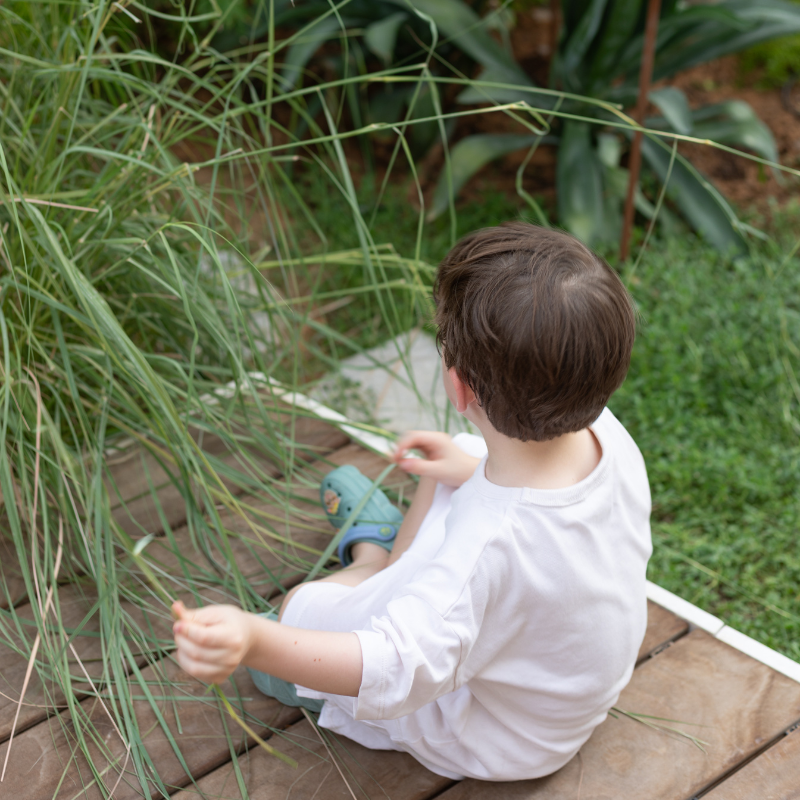
children respond to their environments instinctively.
they climb before they sit. they see what could be, not what there is. they follow curiosity rather than routes.
because natural play isn’t fixed or defined, it evolves continuously. children find new ways to use the same space over and over, allowing the garden to grow with them rather than being outgrown.
this is why natural play feels so natural. it mirrors the way many of us learned to play ourselves – outdoors in nature, led by imagination and movement. to some, this may seem obvious, but evidence shows us that isn’t the case…
thinking beyond lawns, slides and plastic
for decades, play in public parks and, by extension, our gardens has followed a familiar style. a flat lawn, a plastic swing, a slide pushed into one corner. from the 70s to the 90s we saw the spread of what Helen Wooley calls ‘KFC’ play - that’s ‘kit, fence, carpet’. that is the mechanised roll out of boring kit play, fenced off, and carpeted with rubber tiles, or worse; plastic grass.
it worked and followed bureaucratic code. but it hugely limits what play can be.
natural play takes a different approach. instead of telling children how to play, it gives them a landscape that invites exploration, imagination, and movement.
no instructions. no right way to use it. just space, materials, and possibility.

natural play environments are non-prescriptive by design. a boulder can be a mountain, a seat, a stage or a hiding place. a fallen log might become a balance beam one day and a pirate ship the next.
because nothing is labelled or fixed in purpose, children are free to invent their own stories. play becomes imaginative rather than repetitive, creative rather than controlled.
this kind of open-ended play supports problem solving, storytelling, and independent thinking. skills that quietly develop while children are simply “playing outside”.
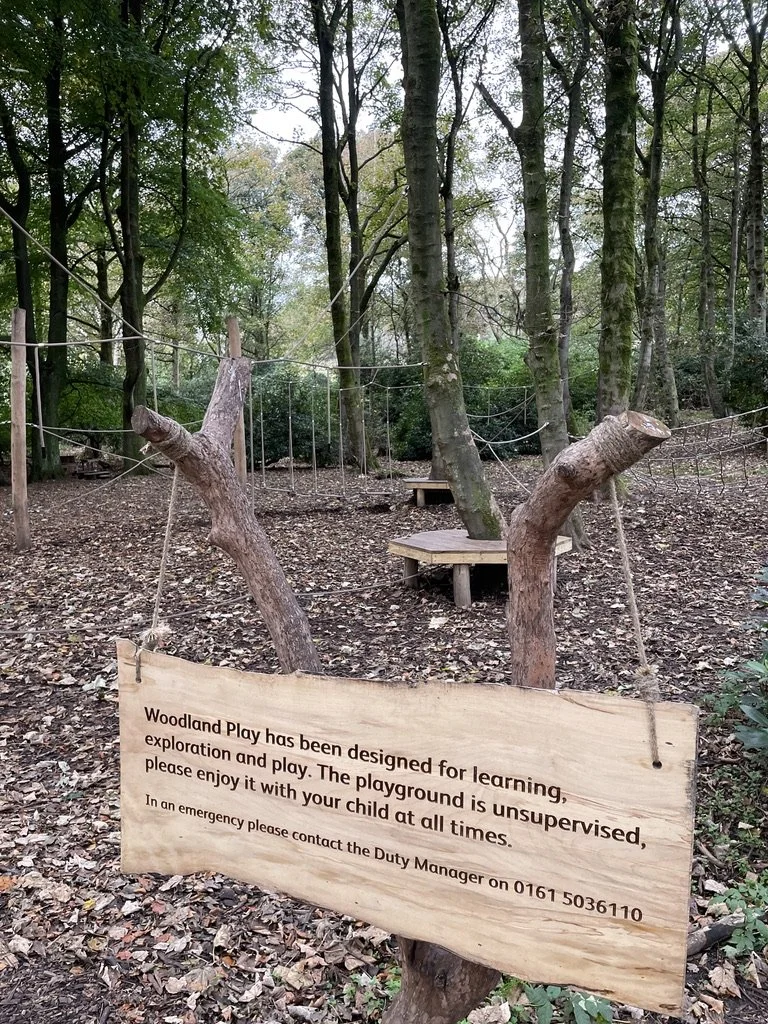
this naturalistic adventure play space has plenty of risk and reward built in. and look, no supervision required.
RHS Bridgewater, Manchester
uneven ground, slopes, rocks, and natural obstacles encourage a wide range of movement. climbing, balancing, jumping, crawling, and lifting all happen naturally when the landscape invites it.
these movements support both gross and fine motor skill development, often more effectively than fixed play equipment designed for a single action.
a gentle hill becomes a place to roll down, run up, sit on, or watch the world from. it’s also a castle, a mountain, a mole hill, a monster’s grave, or territory to fight for. the body learns through variation, not repetition.
natural play also introduces risk in a measured and progressive way.
children learn to judge their own abilities, build confidence, and understand limits. this kind of risk literacy is difficult to replicate in overly controlled environments, yet it’s essential for resilience and self-trust.
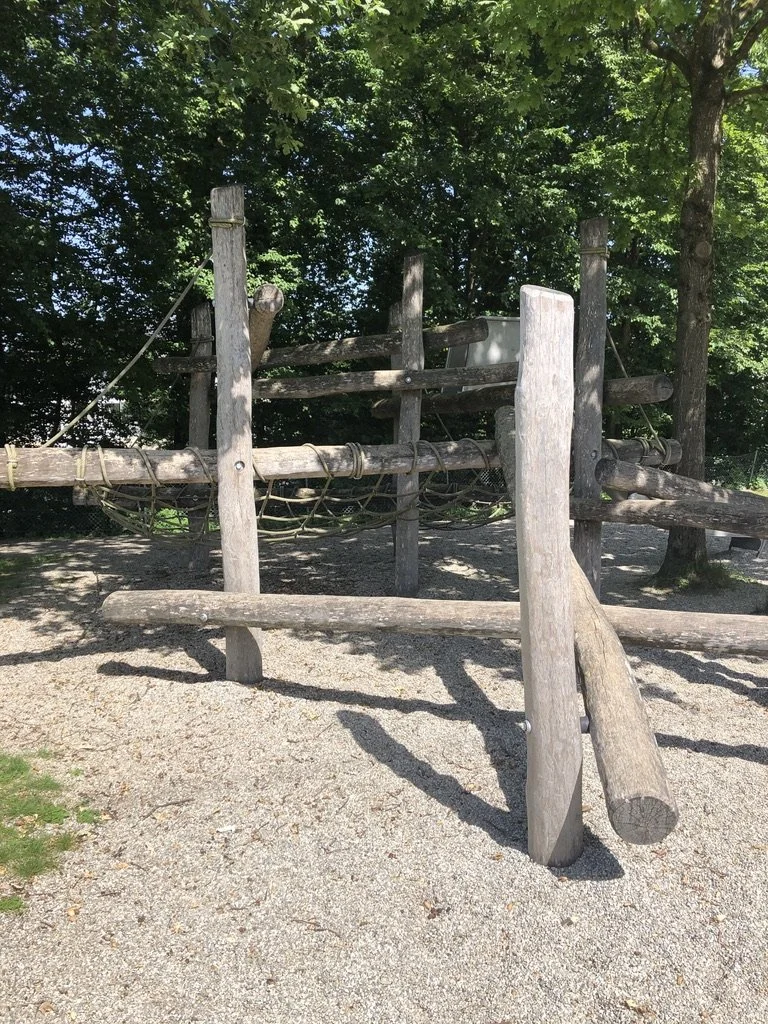
this naturalistic play space was well worn and loved by kids of all ages (trust me!). notice the loose gravel flooring too - completely safe to fall onto from 3m high! German standards; zehr gut.
Munich, 2019
designed well, natural play feels adventurous without being unsafe. the ideal play environments include risk, but not danger. this is a crucial distinction.
gardens that evolve with children
another benefit of naturalistic play spaces is that they evolve. plants grow, materials weather, and children find new uses for familiar elements.
there’s no sense that the garden stops working once the novelty fades. instead, it becomes richer over time, and layered with memory and past use.
appreciating this maturity comes naturally to kids (it’s usually adults that accidentally train kids to want new stuff), and it also means the garden doesn’t have to be redesigned every few years as children grow. the same elements can support toddlers, school-age children and teenagers in different ways.
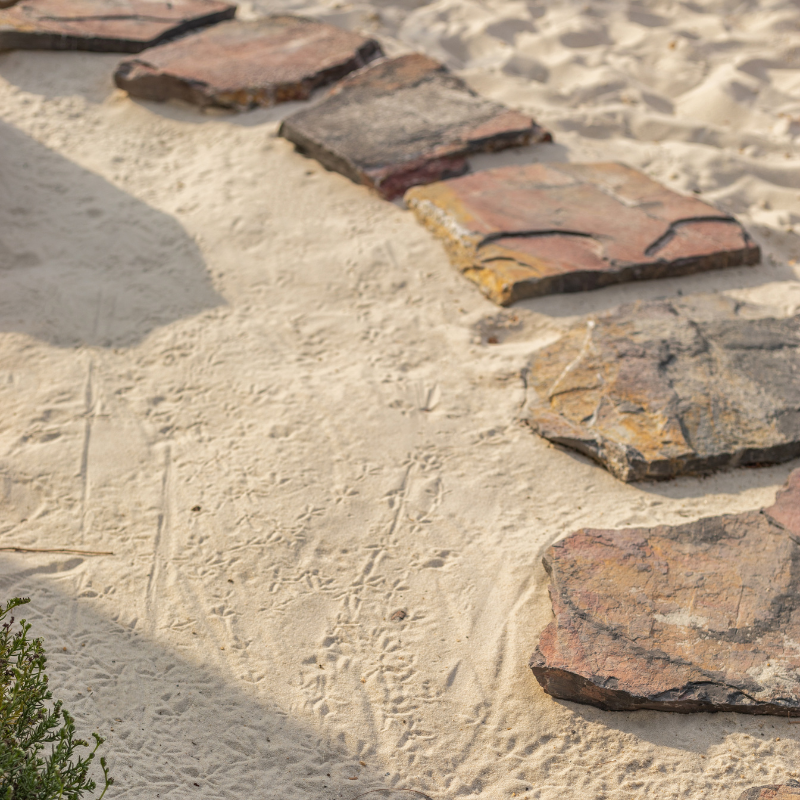

designing play spaces that still look beautiful
a common concern we hear is whether play spaces can still feel calm and considered.
they can.
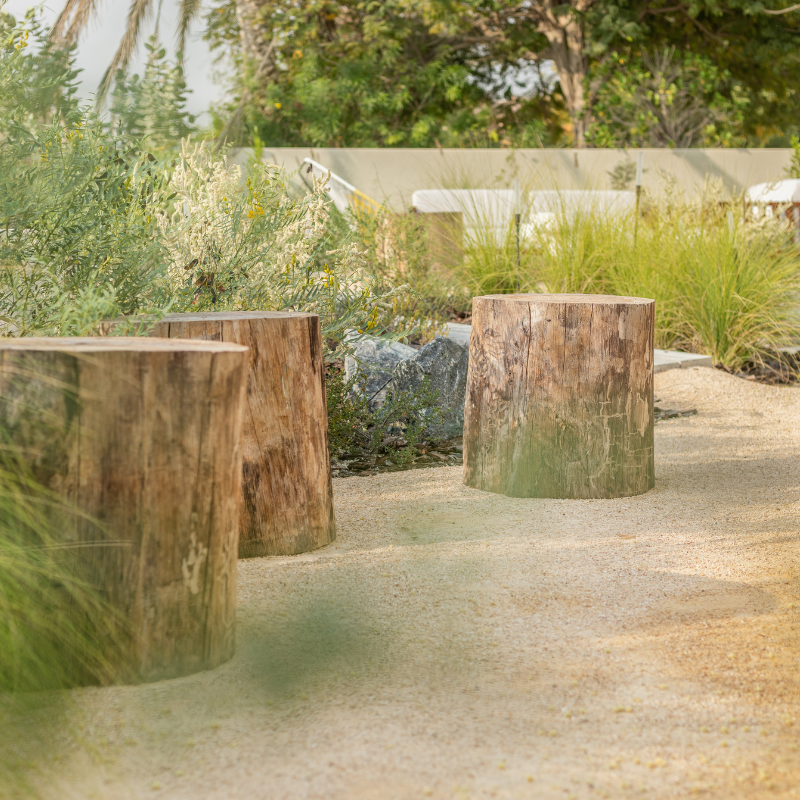
natural play doesn’t have to feel ‘rustic’. when integrated thoughtfully, boulders, logs, landforms and planting enhance the garden’s structure and aesthetic. they belong to the landscape rather than distracting from it.
even when the garden is quiet, these elements act as sculptures, intentional and grounded. the space feels complete, not like something waiting to be used.
natural play in Dubai gardens
within our own projects, play isn’t an afterthought. it’s woven into the design from the very beginning.
we always find ways to add playful level changes, balance beams, and natural elements. we use planting to invite exploration and materials that like to be touched, moved around, sat on or stacked for fun.
we often look beyond traditional playgrounds for inspiration.
projects like Terremoto’s ‘Walker House’ show how landform, logs, and planting can create a really playful landscape for kids and adults alike. we love it because it feels architectural, modern, and so exciting - look at that suspended platform and those rope swings for a good time.
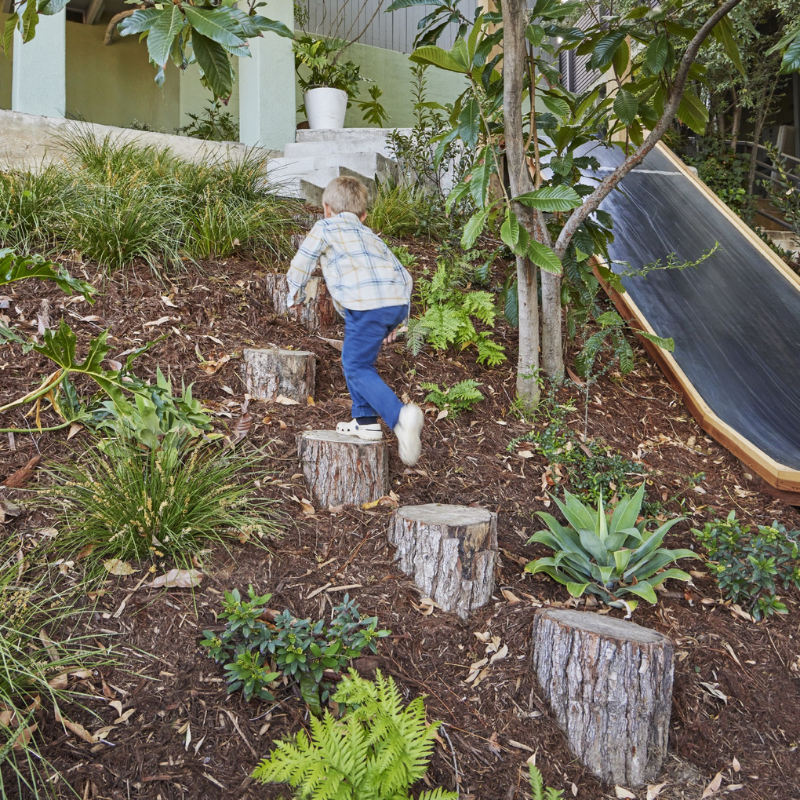

the result is a garden that works for everyone; for children to adults, and both quiet moments and lively afternoons.
natural play is about making gardens more human. because when gardens invite curiosity, and landscapes encourage movement, this is how we build connection with the real world around us.
when we design with play in mind, we’re not just creating somewhere for children to burn energy. we’re giving them a place to learn about themselves, their bodies and the natural world.
and often, without realising it, adults end up playing too.
does your garden support children (and your inner child)?